Join or Die A Case for Community
Rebuilding the Social Fabric of Leadership & Life
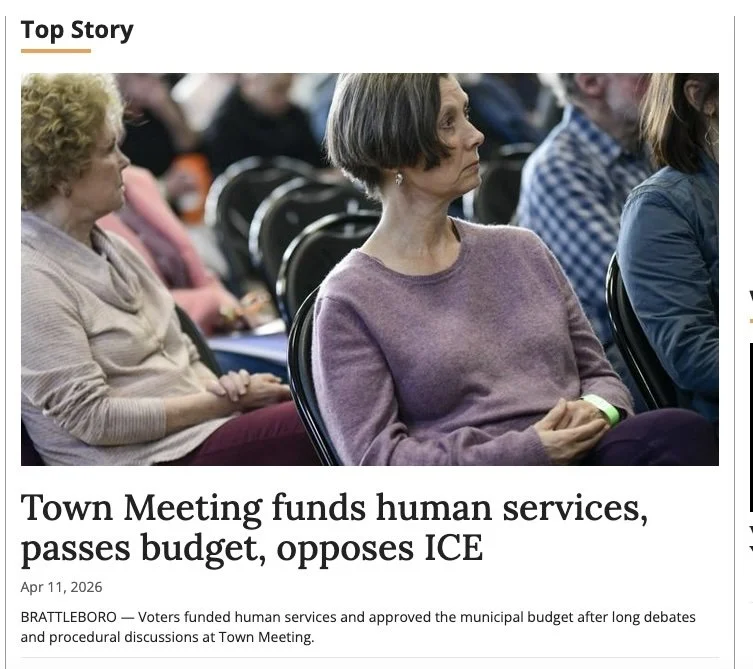
New England town meetings can sound like something out of a quaint history book—or a Gilmore Girls-style “small-town Connecticut” scene—but I recently had the chance to attend my first open town meeting in Brattleboro on April 11th. This year, we shifted from a representative town meeting format with about 140 delegates (a process in place since 1960) to an open town meeting, where anyone in town can come to the high school gym on a Saturday and vote on the budget and other items.
At nine hours and thirty-nine minutes, it was certainly a practice in patience. And yet, I left feeling genuinely encouraged. I saw members of our community come together to hash out real issues. From what I heard, it was a marked improvement over recent years—more civil, less polarizing, and ultimately leading to reasonable compromises. It wasn’t perfect by any means (yes, there are still people who take up too much air), but overall, it was a day of democracy in action.
Seeing people in my community IRL (in real life), rather than through social media made a qualitative difference. At a time when people feel more disconnected than ever, I find myself increasingly focused on how we rebuild social capital—for our health, our democracy, and the future of our children.
A Case for Community
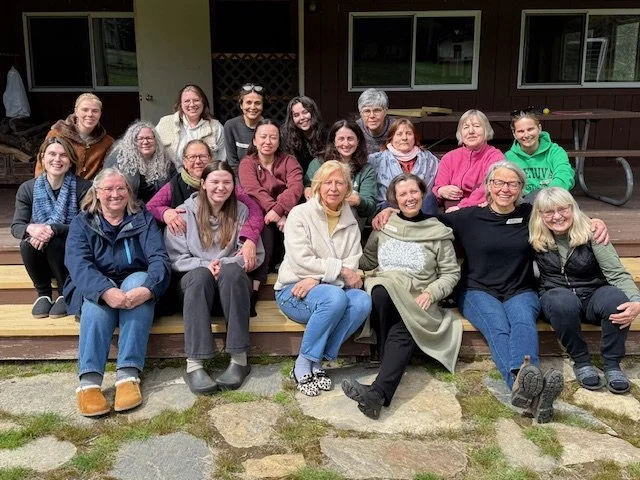
This past weekend, I organized the 21st annual Women’s Weekend for women of Lithuanian heritage at Camp Neringa in Vermont. I chose the theme of Rebuilding Community and screened Join or Die (see trailer below). The premise: we need social capital for communities to thrive.
And yet, since 1960, participation in organizations and gatherings of all kinds has steadily declined—whether church attendance, labor unions, parent-teacher associations, bowling leagues, or even informal gatherings like picnics and dinner parties.
The reality is twofold:
We are social beings, and our health depends on being in community with others (FYI: social media “likes” don’t count).
Community is essential to a healthy democracy.
Researcher Robert Putnam asserts there are three main components to social capital: trust, reciprocity and norms of cooperation.
Trust: A shared belief that others will act in fair, reliable, and mutually respectful ways.
Reciprocity: A pattern of mutual giving—help offered with the expectation that it will be returned over time, directly or indirectly.
Norms of Cooperation: Unspoken agreements that guide people to work together for the good of the whole.
While building community and belonging can feel amorphous, these elements give us something concrete to work with.
In my leadership work with teams, psychological safety is the single strongest predictor of performance—that’s trust. Reciprocity shows up in the leadership literature as “give and take.” We all know the “takers”—they’re not strong team members. And norms of cooperation? Those are the ground rules—on teams and in civic life.

Recently, those broader norms of civil society have eroded. That’s part of what has made town meetings more hostile and our country more divided. (I loved this 2023 viral video of a pilot calling for basic decency . . . sometimes it really is that simple.)
We can choose how we interact with one another.
Social capital is the glue that holds society together. But rebuilding it won’t look exactly like it did in the past. The conditions have changed: more dual-income households, economic pressure, widening inequality, rising racism, and the pull of digital life, to name a few. Still, if Americans were able to build social capital in the decades following the Gilded Age up until a peak in the mid-1960s, we can find our way back to one another in this era of disconnection and disinformation.
Great Link
This is the trailer for the documentary Join or Die- inspiring! (3:01)
Reflection Exercise: Moving from Theory to Action
To support you to build more belonging and social capital in your life:
Where in your life do you already experience a sense of genuine belonging—and what makes that possible?
Who are 2–3 people you could reach out to this month—and where might you take one small step toward participating more fully (at work, in your community, or in your neighborhood)?
What feels like the biggest barrier to moving forward—and how could you make it easier? (For example: if a dinner party feels like too much, could it be a potluck, breakfast bagels, or a hike with friends?)
People rarely join without being personally asked—who could you invite into something you’re already part of?
Belonging grows through repeated, meaningful contact and shared purpose—how might you build more consistency?
Given that we spend more time at work than anywhere else, how might you intentionally create a greater sense of belonging—for yourself and others?
Quarterly Quote
“Democracy is not only a procedure but an awakening. It is fifth-dimensional politics, just as freedom is fifth-dimensional life. It does not arise on its own. It needs us and our values. Democracy is a verb disguised as a noun. Its supporters must believe in it and support it.”
-Timothy Snyder, On Freedom
Book Review
The Art of Gathering: How We Meet and Why It Matters
By: Priya Parker
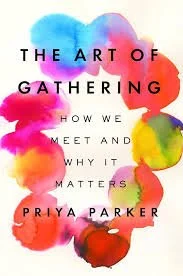
What I appreciate most about this book is that, just as the elements of social capital can be made concrete, so can the art of bringing people together. Parker takes something that often feels intuitive or even accidental—meetings, dinners, retreats—and shows how it can be designed with intention. She challenges us to move beyond default, transactional gatherings by starting with a clear purpose, being thoughtful about who is invited (and why), and creating conditions for real connection. The result is a set of practical, actionable principles that help transform everyday group experiences into something more meaningful, engaging, and ultimately more fulfilling.