

The Goal That Took Eight Years to Complete
What a Slow Hike of the Vermont’s Long Trail Taught Me
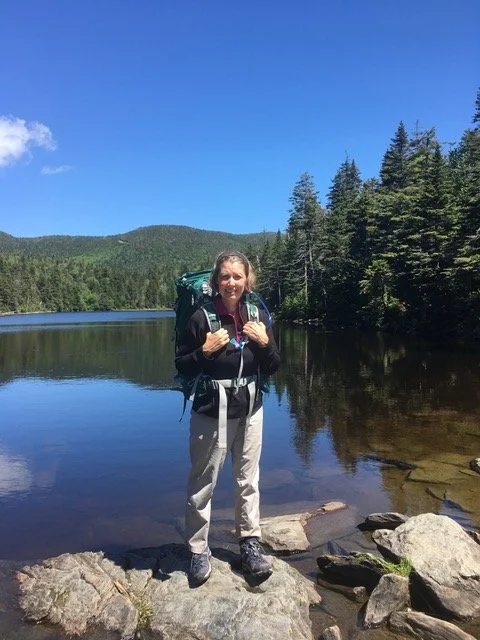
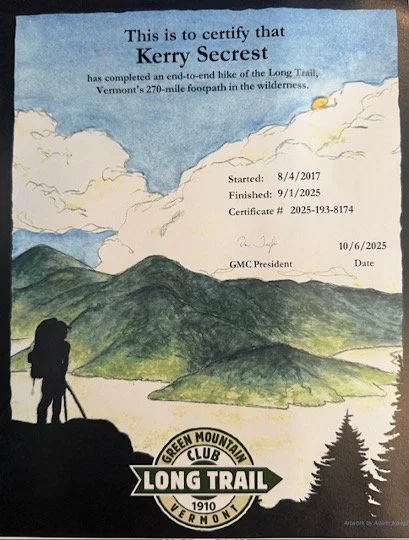
This September I completed a long-held goal: hiking the entire Long Trail, Vermont’s 270-mile footpath through the Green Mountains. While most people hike it end-to-end in about three weeks, I completed it in record time… eight years! The idea first came to me when my daughters were young. I knew two women who hiked the trail one week each summer with their daughters. Three summers, one week at a time, memories for a lifetime. Brilliant, I thought. I bought the map, the book, and presented it to my girls with great excitement— and – well, nothing. Pretty strong “no way,” in fact.
I waited a few years, hoping the answer might change. It didn’t. Eventually I realized I needed to adjust the goal. If I wanted to hike the Long Trail, it had to be my goal—not my daughters’, and not my husband’s (though he joined me for parts of it). So I decided to section-hike it, choosing segments based on where I happened to be traveling in the state, or when I could ask someone for a ride. And so I kept at it. Year after year. Some years just one weekend, sometimes two. A slow goal. But it lived in the background of my life, a highlighted patchwork slowly filling in on the map. That process got me thinking: I tend to focus most on short-term goals—the ones I declare and pursue with intensity. But what about long-horizon goals over a period of years? What do they teach us?
Lessons from the Long Trail
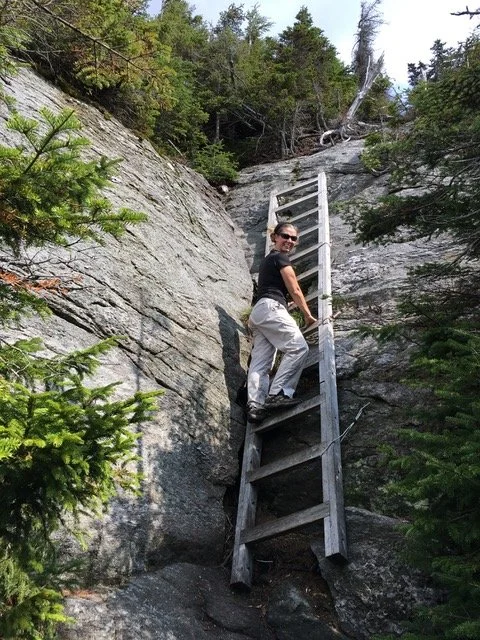
Along the way, the trail offered a set of lessons that feel surprisingly relevant beyond the mountains:
Clarify what matters—and release the rest. I let go of hiking the trail “in order” and instead optimized for ease and feasibility, choosing sections based on location, timing, and access. By focusing on what truly mattered—completing the trail—I freed myself from unnecessary constraints that would have made the goal harder to sustain.
Create space for quiet practice - One five-day solo section became an intentional silent walking retreat. With little external stimulation, I watched my mind until it began to settle. What I feared as an extrovert became one of the most memorable parts of the trail.
Know when solitude nourishes—and when connection helps. While I value time alone, I confirmed that hiking is easier for me with a companion. Conversation lightens the miles.
Build simple systems -I forgot my trekking poles more than once when packing up for an early start—and paid for it by backtracking a mile or two. Small routines and checks—packing systems, habits—prevent avoidable setbacks.
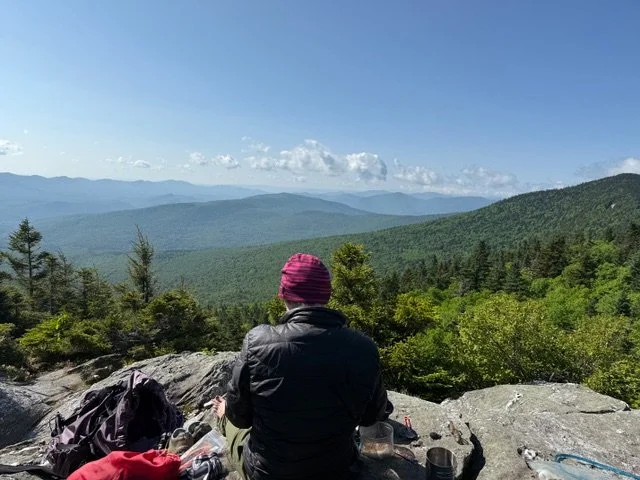
Sustain yourself with joy - I brought treats. I stopped for hot coffee. I happily ignored the “cold soak only” mentality—where some thru-hikers skip a stove to save weight and eat cold, rehydrated rice and vegetables for dinner. (Craziness.) Long goals require delight, not just discipline.
Take thoughtful, calculated risks - I relied on my long experience with backpacking, refreshed my wilderness first aid skills, and updated my kit. I stayed mostly offline, but sent brief location texts from mountaintops and shared my plan with Jon. Preparation created peace of mind.
Practice presence over performance - Should I take the extra .2-mile detour for an off-trail view, or pause for a swim? I chose to pause—for beautiful views, cold water, and time to linger. It wasn’t a race; the experience was the goal.
Hold the goal lightly if that helps - I kept weekends open and chose dates based on weather. Sometimes it worked; sometimes it didn’t. One year I didn’t hike at all because other priorities took precedence. The goal waited.
Let structure support motivation - I’m someone who’s energized by clear goals. Declaring the Long Trail goal gave me a gentle psychological push and oriented me toward what I love most—backpacking. I created conditions that made follow-through possible.
End with gratitude - For my body and my health. For where I live. For friends who joined me. For Jon and my daughters, who supported me with rides. For chocolate, and hot coffee on crisp mornings. For warm, cozy socks at the end of a hard day, sunlight on a patch of ferns, and mountaintop views that reminded me how lucky I am to be alive.
Great Link
Here is a visual photo montage I just created from my time on the Long Trail: (3:06)
Reflection Exercise: Moving from Theory to Action
To support you in creating longer, slow goals:
What long-horizon goal is quietly living in the background of your life right now, even if it isn’t getting much attention?
What truly matters in that goal—and what expectations, structures, or “shoulds” might you release to make it more sustainable?
What simple system, habit, or routine would prevent avoidable friction and conserve your energy for what matters most?
Where might adding a small amount of joy or delight increase your capacity to stay engaged over time?
How can you hold your goal with both commitment and flexibility, allowing progress without forcing timing or outcomes?
Quarterly Quote
Perseverance is not a long race; it is many short races one after the other. – Walter Elliot
Book Review

Designing Your Life: How to Build a Well-Lived, Joyful Life
By: Bill Burnett and Dave Evans
For anyone wrestling with how to move meaningfully toward a big horizon goal, this book has been a go-to recommendation I’ve offered clients at important crossroads. The book grew out of one of Stanford’s most popular courses—at one point enrolling roughly 17% of undergraduates—which applies design thinking to life and career decisions rather than waiting for clarity to magically appear. It’s a New York Times #1 bestseller, and for good reason. Its practical exercises encourage small experiments, reframing “failure” as data, and learning through action. In the context of long-term goals, it’s especially useful because it helps you keep steering toward what matters—patiently, iteratively—even if it takes you eight years, as my Long Trail goal did.