Young Geniuses & Old Masters
What Each Can Teach the Other
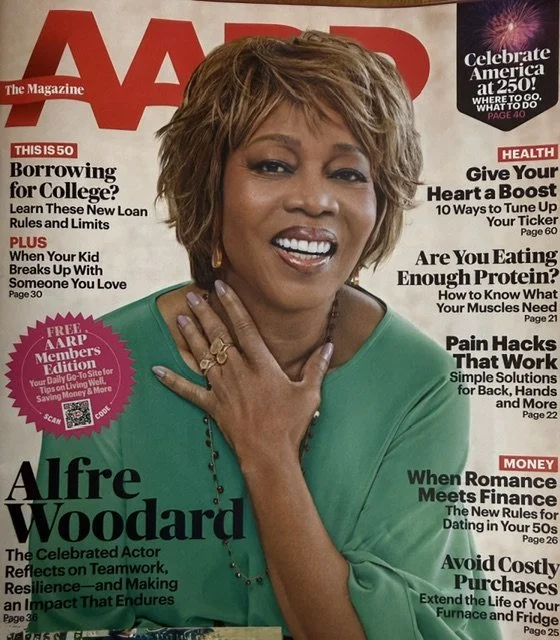
Back when I turned 50, one of my more surprising identity moments arrived in the mail: a complimentary issue of AARP Magazine. Retirement was still years away, yet the demographic algorithms had found me and decided I was part of the tribe. For me, life often seems to move along steadily until, suddenly, a chapter has closed and a new one has begun. Student. Professional. Parent. Mid-career leader. Each stage arrives before we're quite ready for it. (You can read more about this in my blog on transitions.)
Lately, I've been working with more and more leaders who are contemplating the final chapter of their careers. Retirement is visible on the horizon, yet many tell me they aren't ready to stop working. At the same time, they no longer feel energized by the hustle, ambition, and constant striving that motivated them earlier in life. Instead, they are asking different questions:
How can I continue to contribute in meaningful ways?
Where is my experience most valuable?
What do I want this next chapter to stand for?
These questions point to one of the great developmental shifts of the second half of life. At the same time, our culture often celebrates youthful innovation while overlooking the strengths that come with experience. Yet organizations that fail to recognize the value of seasoned professionals miss an important source of wisdom, judgment, perspective, and mentorship. The workforce itself is aging: in 1990, about one in five workers was over age 55; today, it's closer to one in three, particularly among knowledge workers.
The second half of life can be an extraordinarily rich season—if we prepare for it intentionally. Join me in this conversation.
Interesting Nugget: Young Geniuses vs. Old Masters
We often hear that aging means decline, but the research tells a more nuanced story. While some abilities peak early, others continue to strengthen well into later life. Here are three distinctions I’d like to offer.
1. Fluid Intelligence vs. Crystallized Intelligence Two kinds of intelligence psychologists describe are fluid intelligence and crystallized intelligence. Fluid intelligence is our ability to process new information, think quickly, and solve novel problems. It tends to peak in early adulthood and gradually decline over time.
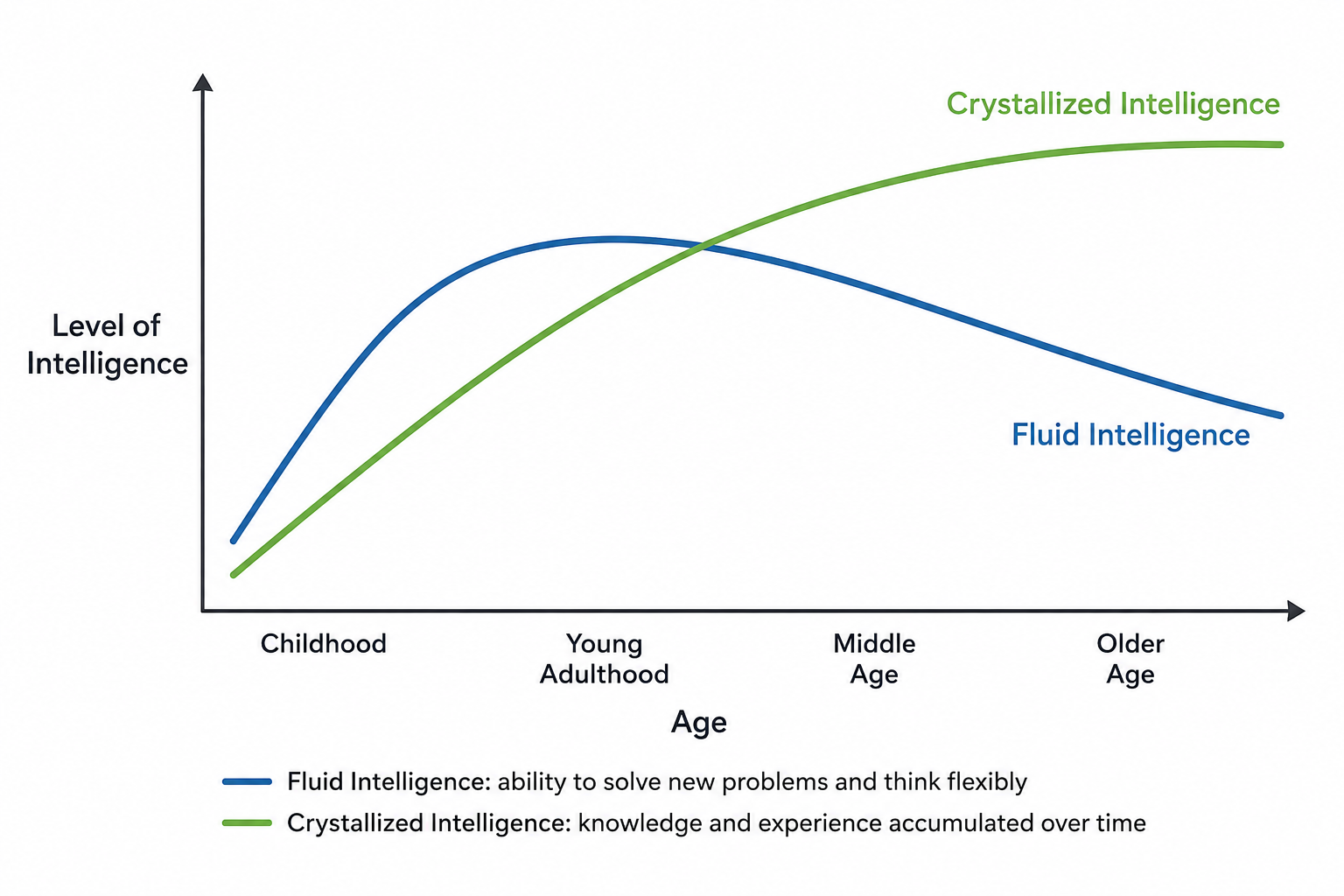
Crystallized intelligence, on the other hand, is the accumulated knowledge, judgment, vocabulary, expertise, and pattern recognition we develop through experience. This form of intelligence often continues growing into our 60s and beyond. In leadership roles, crystallized intelligence can be invaluable. The ability to recognize patterns, anticipate consequences, and draw from decades of experience often compensates for any loss in pure processing speed.
2. Conceptual Innovators vs. Experimental Innovators Economists who study creativity have identified two broad paths to innovation. Conceptual innovators often make their breakthrough contributions when they are young. They challenge assumptions, see possibilities others miss, and are less constrained by established ways of thinking. Think of the young mathematician, entrepreneur, or software developer who disrupts an industry. Experimental innovators tend to achieve their greatest work later in life. They accumulate knowledge over decades, refining their craft through trial and error. Their breakthroughs emerge from deep mastery rather than sudden inspiration. The research offers an encouraging reminder: while some forms of creativity peak early, other forms deepen with age. The experimental innovator's advantage is not speed but mastery—drawing on a lifetime of experience to produce insights that simply couldn't have emerged any earlier.
3. Capacity vs. Capacity Utilization Research also suggests that younger adults often possess greater raw physical and cognitive capacity. Yet older adults frequently make better use of the capacities they have. Experience helps us focus on what matters, avoid unnecessary mistakes, regulate emotions, and allocate our energy more effectively.
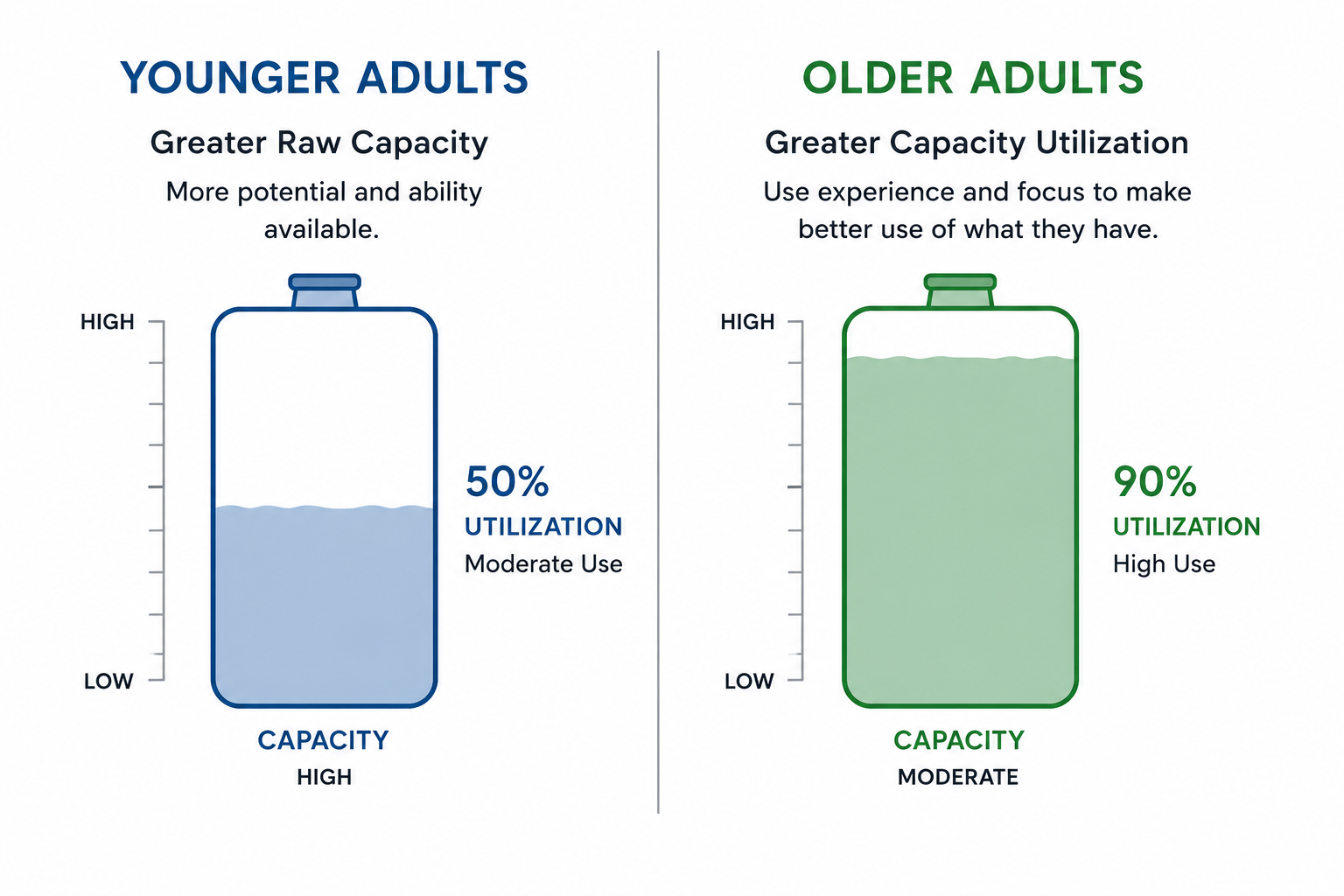
In other words, aging may bring some limitations, but it often brings efficiency, wisdom, and perspective. Perhaps the conversation shouldn't be "young geniuses versus old masters." We need both. The energy, creativity, and fresh thinking of youth, combined with the pattern recognition, wisdom, and steadiness that come from experience, create the strongest teams, organizations, and communities. What about you? What are your thoughts and experience on this topic? Please drop me a note! P.S. If this conversation intrigues you and you'd like to explore your own next chapter, feel free to reach out. Executive coaching offers a thoughtful space to reflect, gain clarity, and move forward with intention.
Great Link
Identity Crisis: Why Defining Yourself by Your Career Is a Problem(6:29)
Reflection Exercise: Moving from Theory to Action
As you think about your next chapter, consider these questions:
What aspects of my work continue to energize me and provide purpose and meaning, and which ones feel complete?
What wisdom, expertise, or perspective have I earned that others could benefit from and how might I share it?
If achievement were no longer the primary measure of success, what would I want this stage of life to be about?
What values, relationships, or contributions would take center stage?What new roles or projects might I pursue if I viewed this transition as an opportunity rather than an ending?
Looking back ten years from now, what would make me feel that I used this season of life well? What legacy, impact, or experience would I be most proud of creating?
Quarterly Quote
We cannot live the afternoon of life according to the program of life's morning. – Carl Jung
Book Review
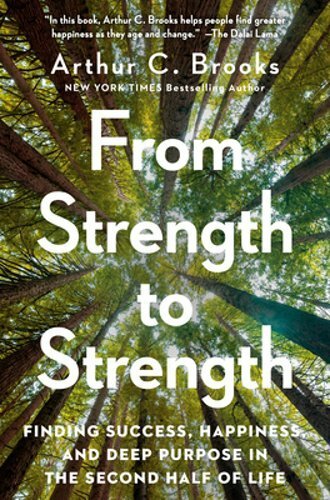
From Strength to Strength: Finding Success, Happiness, and Deep Purpose in the Second Half of Life
By: Arthur C Brooks
This is my new favorite book I share with clients in the second half of their careers. Author Arthur C. Brooks challenges the common assumption that aging is primarily a story of decline. Instead, he argues that many successful people struggle because they continue measuring themselves by the standards that drove achievement earlier in life. Drawing on research, philosophy, and personal experience, Brooks encourages readers to embrace a "second curve" of life—one focused less on accomplishment and status and more on teaching, mentoring, relationships, service, and deeper purpose. His message is both hopeful and practical: fulfillment in the second half of life comes not from holding on to who we once were, but from becoming who we are uniquely positioned to be next. It’s an easy read with lots of good nuggets of wisdom. I highly recommend!